Scuba Diving From Phuket
Phuket offers fabulous scuba diving tours at destinations suitable for all levels of diver. Whether taking scuba courses or diving for fun, to get the best out of diving from Phuket here's what you need to know :
Make the right choices, buddy-up with an experienced scuba instructor, and your Phuket diving adventures could result in something very special!
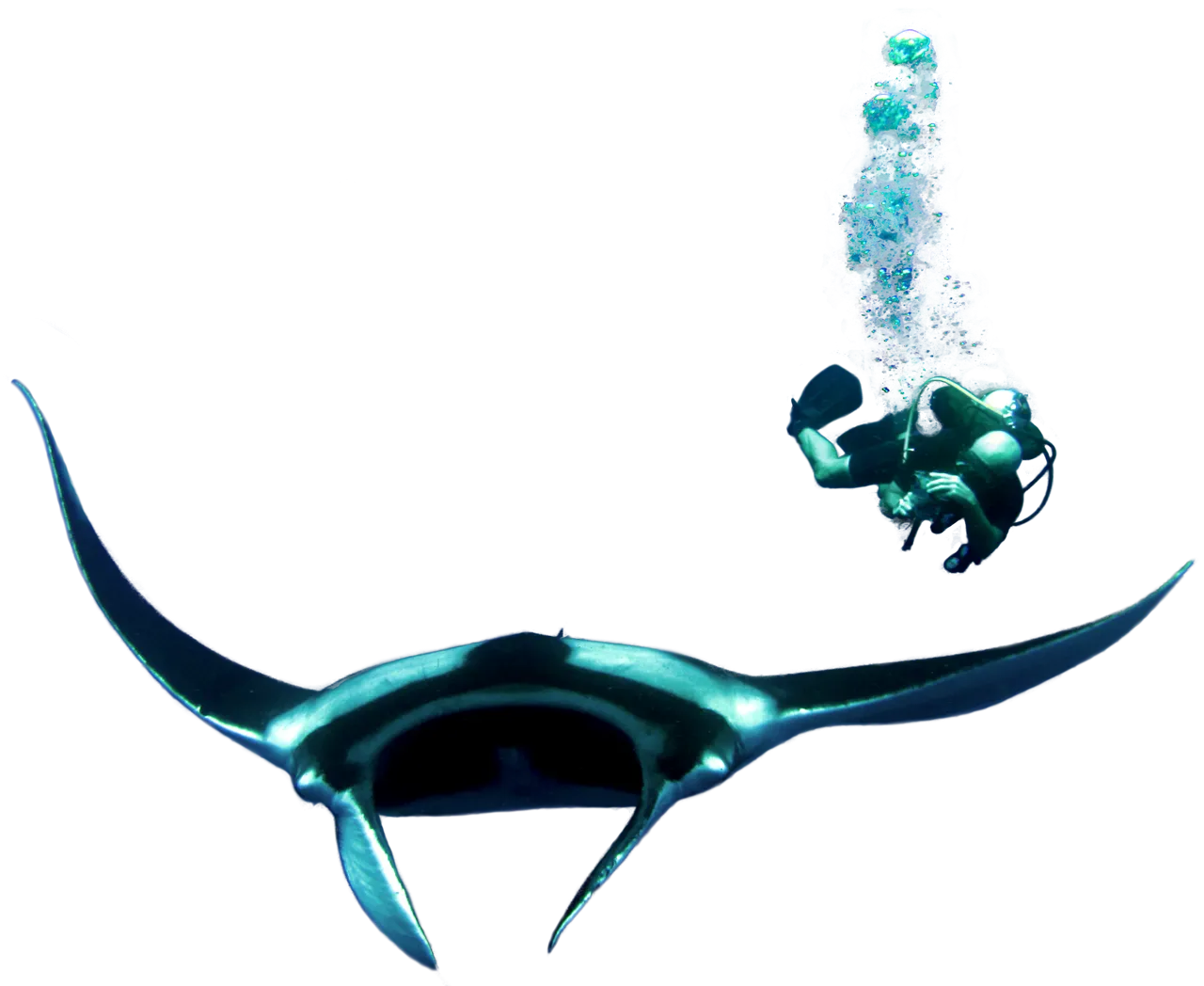
⇓ Some Of Phuket's Bigger Critters ⇓
Why Go Scuba Diving In Phuket
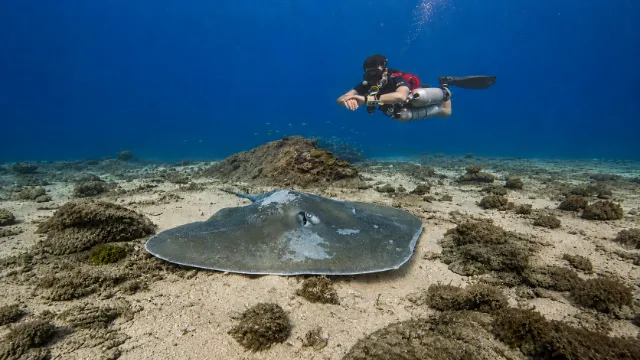
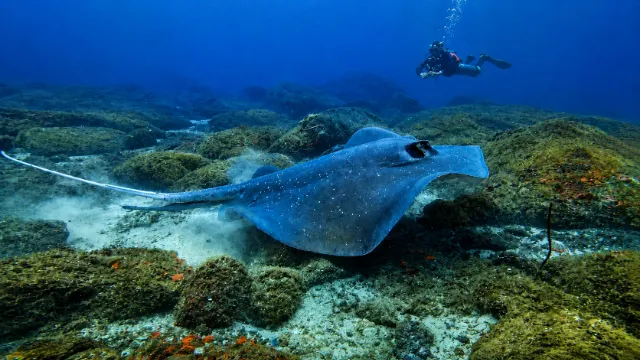
I've been diving Phuket almost every day since 2007 and I still get to see lots of great marine life. This includes big creatures (sharks, rays, turtles and more), rarer critters (seahorses, special nudibranches etc.), and I even see new things sometimes. And I'm often diving in nice conditions and always from comfortable boats.
Phuket's diving day trip destinations have a wide variety of reefs and topography. Some more often have clear easy diving conditions, while others are more rich in fish, corals and critters - a benefit of being part of the Indian Ocean!
Of course, there can be changes in visibility and current due to weather and tidal movement (which is why you need an experienced scuba instructor), and on occasion the reefs can be affected by water warming - like almost everywhere in the underwater world - but there's still great diving from Phuket!
Boat / diving services are exceptionally good, so you can book a dive course or diving trip with ease, on safe and well maintained boats that have excellent facilities and provisions. Plus Phuket's infrastructure (airport, roads, transport, hotels and dive shops) also benefit the whole dive trip experience, and you can even get to dive the Similan Islands and Richelieu Rock on a liveaboard from Phuket.
Bottom line: It's easy to book dive trips & scuba courses and have an awesome Phuket diving experience!
And I often say, "If you don't go diving, you won't see anything!" If you go diving from Phuket, with a little luck you just might see something special!
Excellent Diving Tour Services!
Phuket Diving Day Trip Tours
Day Tour Dive Boats
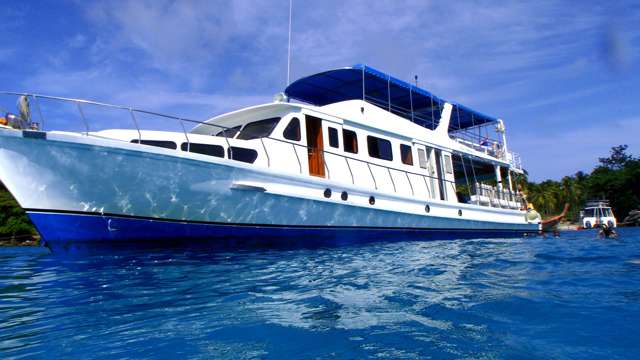
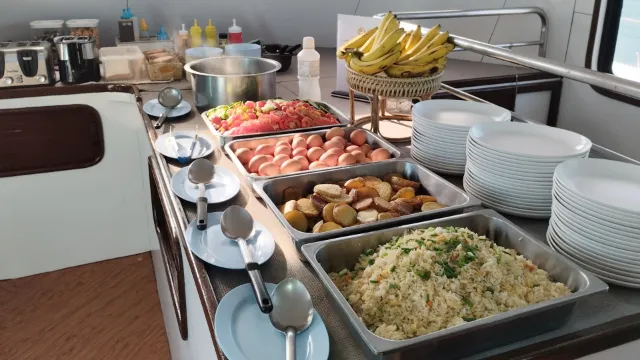
Arguably, the best Phuket diving tours involve full day trips, on large comfortable boats with full facilities: proper dive decks, sheltered lounges / dining areas and toilets. Air tanks and weights are on the boats, with on-board compressors for refills. Some can provide larger air tanks free-of-charge, though there's a small charge for Nitrox fills, which usually have to be pre-ordered and brought onto the boats in advance.
Because scuba diving day trips run on large boats, they need a sufficient number of divers to run. So generally speaking, dive schools / companies will book onto a dive tour provided by a boat company. A good dive school will book what they think is the best boat available for the destination and diving that you require. Again, it's always best to check.
There are a few dive schools that run their own boat(s), but most can't run without other dive schools booking spaces on their boats, so there's usually little advantage to booking with a dive school that has its own boat. Actually, it can be a disadvantage because their boat may not be going to the appropriate / best dive sites on the days you need.
Good Dive & Safety Equipment
Day Tour Diving Equipment
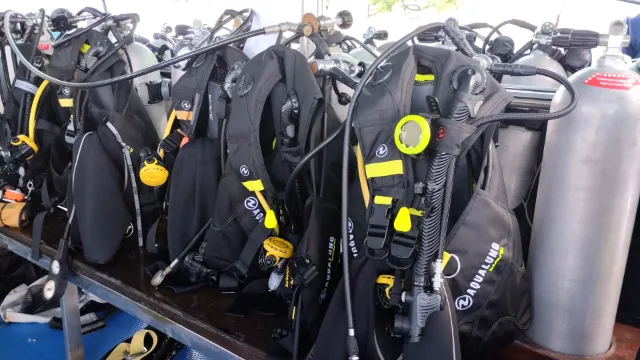
Any dive equipment that you've rented is usually provided by the dive company that you've booked through. Usually the quality of dive equipment is good and consists of a regulator, BCD, 3mm short wetsuit, fins (not for boots) and a mask (sometimes with snorkel) - though it's always best to check. Dive computers are usually provided for courses or can be rented for a few hundred baht if 'fun diving'. And there's usually spare equipment on the dive boats, just in case yours isn't a proper fit or malfunctions.
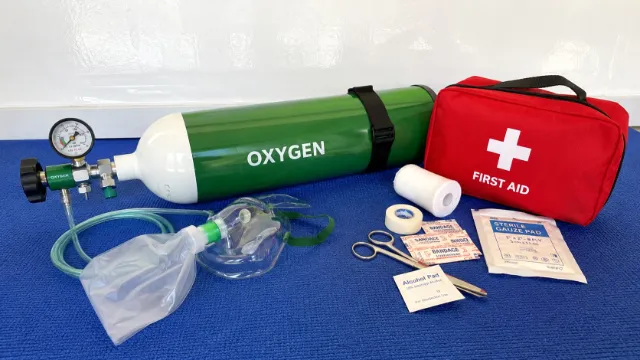
Safety equipment, such as emergency oxygen and medical kits are mandatory on all dive tour boats. And if you are unlucky enough to require medical attention, all dive companies are required to have / provide insurance if you don't have your own. (There are a number of recompression chambers on Phuket, including a multi-place chamber that DAN - the Diver's Alert Network - use.)
If you are using any personal dive gear, it's always good to let the dive company know - especially for BCDs and regulators - to ensure your gear is compatible with rental gear and the boats tank valves. Please also remember to bring / take back your personal gear (you'd be surprised how many forget!) and make sure you bring a towel and swimwear, as these aren't provided.
Diving Day Trips From Chalong Pier
Dive Tour Schedules / Timetables
The 3 diving day trip destinations that on offer all year round are:
* (One of the 3 dives on trips to the Phi Phi Islands is usually on the way there or back at Shark Point, Koh Doc Mai or Anemone Reef. Also, Phi Phi is a marine park so take some cash to pay the park fees.)
These are available most (if not all) days of the week - although there are seasonal variations and it's best to book earlier to reserve your place.
So long as you are staying along the major pick up routes (Kamala, Patong, Karon, Kata, Rawai and Chalong), the minibus transfer services to / from Chalong pier are included on standard trips.
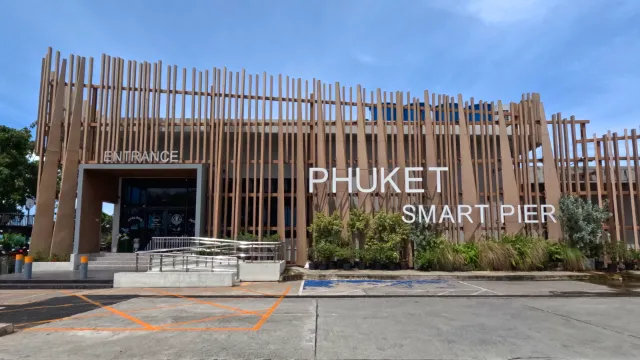
Pick ups from hotel lobbies start at around 6:45am, with pick ups in Patong at around 7am - obviously the closer you are to Chalong, the later your pick up. Minibuses aim to drop you at Chalong Pier around 8am, where you are normally greeted by the boat's tour leader, who hands your over to your diving instructor.
If making your own way to Chalong Pier, you should aim to meet there at 7:40am and make sure you have an accurate location for the meeting point and a contact number.
Return times to Chalong Pier start around late-afternoon for 2 dive only trips to Racha Yai, the others returning later:
Approximate Travel times from Phuket to the dive sites are:
(Boats may visit the closer dive sites first, en-route to the farthest destinations.)
Dive Times & Surface Intervals:
Maximum dive time is usually limited to around 50 minutes, with around an hour's surface interval for lunch / snack breaks, although other arrangements can sometimes be made for technical diving requirements.
Chalong Pier Check-In Procedures
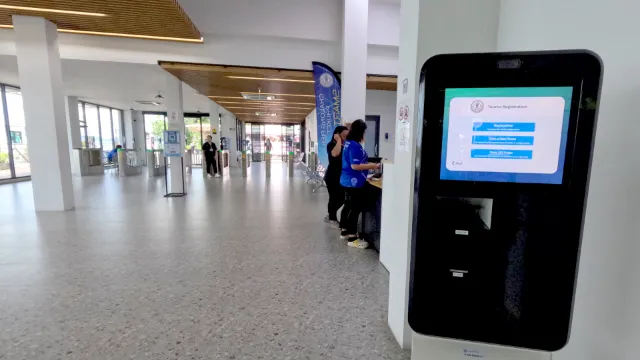
Since 2025, it's been necessary to register for a QR code to gain access to the Chalong Pier and transportation to the dive boats. The procedure is quite simple and can either be done via the internet (on your phone for example) or directly at the pier using their check-in kiosks.
Steps to register by internet for Chalong Pier access:
Steps to register at the kiosks are similar. Either way, it takes a minute for the information to be processed and then you're able to walk through the turnstyles via facial recognition or showing the QR code.
⇓ Phuket Diving Offers Great Variety ⇓

Dive Tour Destinations / Sites
What Phuket's Diving Tours Offer
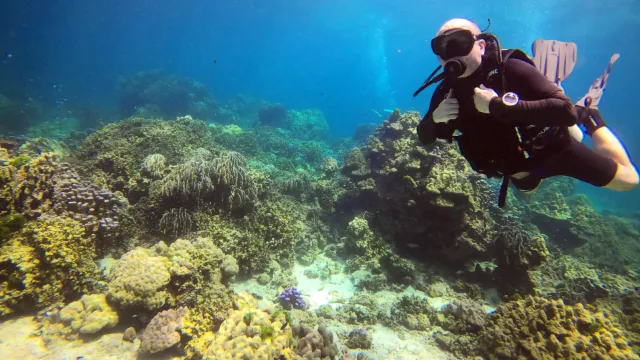
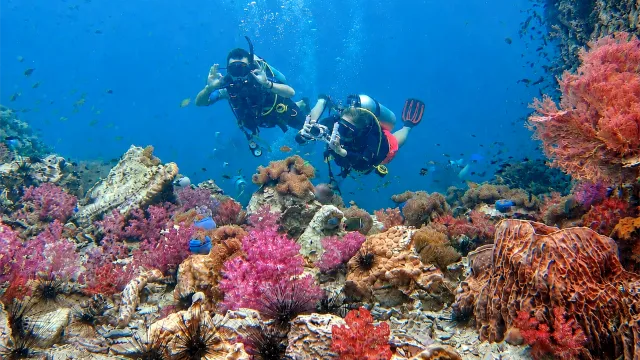
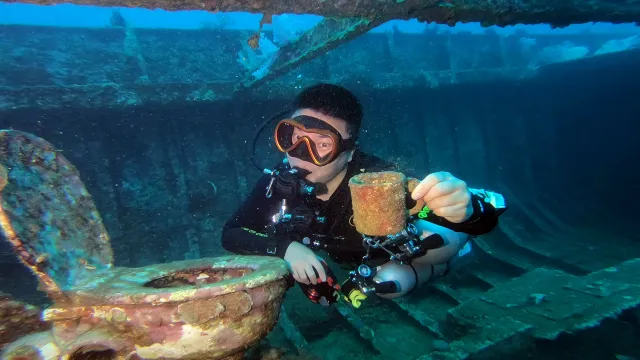
Phuket's scuba diving day trips offer a great variety of hard coral, soft coral and boulder reefs. Also, artificial reefs (concrete structures) have been placed at many of the dive sites, to attract / protect marine life and make some dives more interesting, and some sites also include ship wrecks - the best and most famous being the King Cruiser wreck.
All of Phuket's diving destinations have a good amount of marine life. Some dive sites, like the Phi Phi Islands, Shark Point and the King Cruiser have fish in abundance. Other dive sites may not have quite as many fish but perhaps have 'quirky' interesting critters to see, like at Racha Yai and Kata Beach.
Some dive sites are better for 'landscape' diving - the more you swim, the more you see - perhaps for big schools of fish, sharks and turtles. Other dive sites are more for 'macro' marine life - you go slow for the small critters and anything bigger you'll see on the way.
And when choosing a scuba diving tour, don't forget that being aware and able to appreciate what you can see at the dive sites will depend on how comfortable you may feel on the dives: Lower visibility can focus your attention, to find rarer critters on a wreck. Strong current can bring sharks in closer to a reef. But if you aren't comfortable on a dive, you may not even notice or be able to pay attention to the marine life.
Beginner / new divers can enjoy 'fabulous' diving at 'easy' dive sites, because they feel comfortable. And even experienced divers can enjoy good visibility, low current, with some cool critters to see that they didn't see on other dives.
Diving At The Racha Islands
The Racha Islands
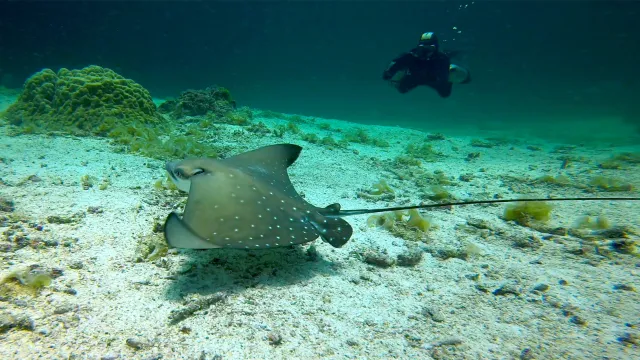
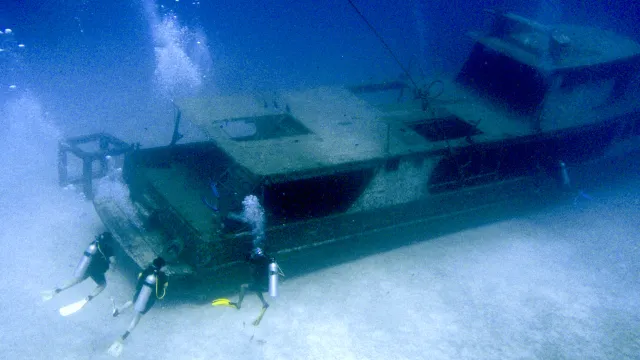
Due south of Phuket, Racha Yai and Racha Noi generally offer a good balance between easy diving, nice visibility and interesting marine life on the hard coral reefs, boulder reefs, artificial reefs and sandy bays. Racha Yai's east coast also has a number of 'simple' ship wrecks that are a nice additional feature on a dive tour there.
The east coasts of the Rachas are perhaps considered the 'prettiest', especially the shallow hard coral areas that are surrounded by white sands. The artificial reefs on Racha Yai's east, though not so pretty, do harbour interesting marine critters. And some of the deeper artificial reefs on Racha Noi's east attract quite a lot of schooling fish and sometimes big rays or the odd zebra shark.
Dive tour boats will mostly head for the east coasts of the Rachas unless winds from the east are too strong, which usually only happens during Phuket's high-season.
The west coast of Racha Noi is mostly dived in Phuket's high-season, when the easterly winds are stronger. It's shallower reefs are mostly hard coral (lots of plate coral) or boulders, and it's not considered as 'pretty' as the east coast's reefs. There aren't many sandy areas unless you go deep, and then you'd want to visit the isolated coral bommies or the even deeper / better rock formations for more fish, soft corals and maybe some big rays.
There aren't really any sites that are dived on Racha Yai's west coast - except for Bungalow Bay on the north-west.
The bays on the north ends of the Rachas also have some nice hard coral areas - Noi more so than Yai - and the site known as Bungalow Bay, on Racha Yai's north-west is often dived (and is especially busy) when high-season winds from the east are strong.
Although the southern part of Racha Noi is dived less often, it actually has some of the best reefs. And the most southern dive site 'South Tip' is probably the best dive site for seeing manta rays - but it's a pretty exposed / potentially deep dive site that's really only suitable for experience / advanced divers.
Although there are a few sites south on Racha Yai, boats tend not to go there.
Dive Site Suitability
Most of the Racha Islands' dive sites are suitable for all levels of diver, whether trying scuba diving in Phuket for the first time with a 'PADI Discover Scuba Diving' course or as an experienced diver wanting to see something different after having been on Phuket's other dive tours.
Racha Noi & Yai are a great starting point for multiple day dive tours, especially if needing to refresh scuba skills, and they are often included as one of the destinations for more advanced scuba diving courses because they offer a range of underwater environments for different scuba activities.
With Racha Noi's reefs starting very shallow and some progressing down to beyond recreational scuba diving limits, the Rachas are often the destination for technical diving courses and tec 'fun dives' too. Although the east coast of Racha Noi has some nice deep dives, the other coasts are my favourite for tec diving - although currents can be a lot tougher at depth, there's more to see, with interesting underwater topography and often 'bigger fish'.
The Racha Islands are also great for snorkellers / non-divers who'd like to join the trip. The dive boats usually moor up in protected bays, so spending time on-board is quite pleasant, even if sea conditions have been a bit 'choppy' on route.
Affects Of Weather & Current
With the exception of a few dive sites, the Racha Islands offer the most protection from the elements, be it wind, waves or the currents, which can be very strong during certain lunar / tide cycles at other destinations.
Visibility underwater is 15m-30m mostly every day, although there can sometimes be cold murky thermoclines on the Rachas' western dive sites.
Depending on the season, winds generally either come from the east (high season) or the west (low season) - the westerly winds sometimes being stronger and bringing more rain in from the Indian Ocean. The wind direction means that boats tend to rock more en-route, sometimes making waves seem bigger than they actually are. But the islands offer good protection, as mentioned previously.
Summing-up the Racha Islands: divers are rarely disappointed with their diving day.
Diving At The Phi Phi Islands
The Phi Phi Islands
There are many great dive sites around Phi Phi's 6 islands, however Phuket diving tour boats tend to visit the sites on 3 of the islands: Koh Bida Nok, Koh Bida Nai and multiple sites on Koh Phi Phi Leh.
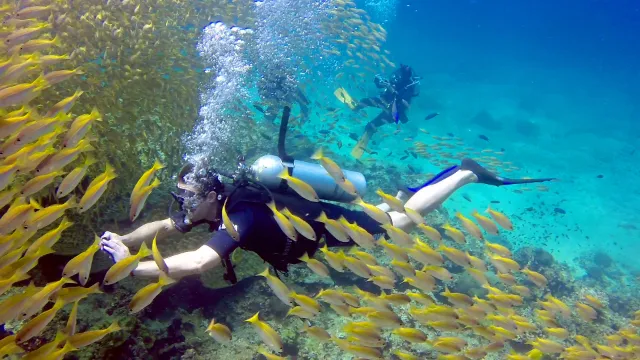
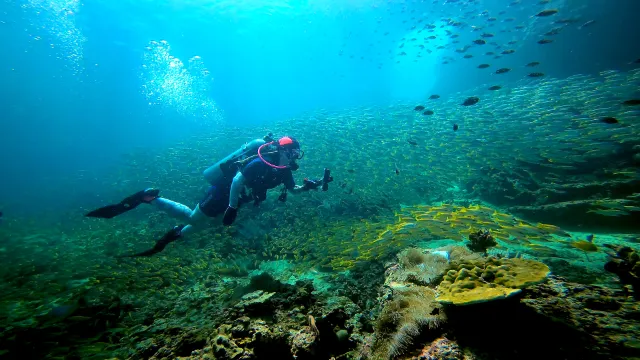
Compared to many diving destinations, the Phi Phi Islands offer marine life in abundance: often huge schools of fish and a great chance of seeing turtles and blacktip sharks. There are of course many other types of fish and critter to see on the various types of reef: clown triggerfish and seahorses for example.
Koh Bida Nok, being one of the best sites, is almost always included on a dive tour to Phi Phi. Koh Bida Nai is also sometimes included when these southern islands are indicating better visibility and currents are no so strong, however the 2nd dive is often at one of Koh Phi Phi Leh's top sites.
The west coast of Koh Phi Phi Leh arguably has better diving than dive sites on it's east. Some of it's western dive sites being: Turtle Rock for swim-throughs, over-hanging walls and... turtles. Palong Wall for it's blacktip shark nursery and maybe a turtle or two. Mushroom Rock (and farther north) for a similar combination, but with more soft corals and potentially more to see at depth.
Koh Phi Phi Leh's eastern dive sites are usually only dived when low season winds from the west are too strong. It's not that the dive sites here are bad, it's mostly that they are dived when conditions are less than ideal. The usual sites here being: Piley Wall, often a drift along a wall with ample soft corals and possibly the odd turtle. Viking Cave, on it's artificial reef or shallow hard coral reef, again for the odd turtle or blacktip shark. Although mostly shallower, the rockier reef and overhanging wall north of Viking Cave Bay often have quite a few blacktip sharks.
There are also small caverns and caves on both Koh Bida Nok (great for training dives) and Koh Phi Phi Leh. Some of the caverns / caves on Phi Phi Leh are of a good size and are excellent for dive tours (if you've the certification to dive them), especially when combined with the richer reefs outside. One cave (Maya Cave) often has a bunch of sharks inside and another (Chandelier Cave) is strikingly pretty.
Due to the longer journey, a diving tour from Phuket to the Phi Phi Islands usually includes 2 dives around Phi Phi (don't forget to bring money to pay the National Park Fee) with the 3rd dive at either Shark Point or Koh Doc Mai on the way out or back. More about the latter two in the next dive sites section.
Scuba Diving Suitability
Day-to-day visibility on a dive tour to the Phi Phi Islands can quite varied, as it is with all day trip dive sites east of Phuket, however it's rarely less than 10m and sometimes can be 20m or more, as at the Racha Islands. The Phi Phi islands also offer descent protection from wind, waves and currents, although the Bida Islands are a little more exposed. But diving at Phi Phi's best sites can be a bit more challenging than at the Racha Islands.
So although there are plenty of dive sites at Phi Phi suitable for even beginner divers, because dive tours from Phuket want to include the better sites, diving around the Phi Phi is perhaps best for slightly more experienced divers or as 2nd or 3rd diving day for student divers. And please bear in mind that the Phi Phi Islands are a National Marine Park, so diving reasonably well / responsibly is a must - negative effects on / damage to marine life is not tolerated and is actually a finable offence (or worse)!
Non-divers should be aware that the Phi Phi sites visited by Phuket diving tours are mostly suitable only for confident snorkellers or free-divers, partly because the boats don't moor up - they drop divers off and then pick them back up some 50 minutes later. And the 3rd dive, at either Shark Point, Koh Doc Mai or Anemone Reef, isn't suitable at all. The 3 hours (approximately) spent at the Phi Phi islands can be quite pleasant for the view above water but it is a long day and isn't so much of a sight-seeing day.
Affects Of Weather & Current
The Phi Phi Islands are centred at the bottom end of a very large bay formed by Phuket Island to the west, Krabi (the mainland) to the east and Phang Nga (mainland) farther to the north. So the Phi Phi islands are somewhat protected from bigger storms, unless winds are more southerly. They can still be affected by bad weather, which can be very localized, and especially the larger swell that may be more present during low season, but there's often a 'pocket' of better weather over Phi Phi's 6 islands.
Visibility can vary quite a lot - it can be 10m or less, or 25m or more, with the regular average usually somewhere in between - and changes day-to-day. At Phi Phi, the farther north the dive site, the lower the visibility tends to be. This isn't an 'exact science' but it's mostly due to (usually) clearer water coming in from the south (the southern part of the Andaman Sea) and the sometimes murkier water coming out from the Phang Nga bay.
This is particularly apparent when currents are strong and they bring out the murkier water from Phang Nga bay, or when they've been strong for a while and have stirred up silt from the seabed. Especially if there's been long and heavy rainfall on the mainland, with lot's of turbid, murky water coming out from the estuaries around the bay. But the currents do play a big part in visibility changes too...
Weaker currents may not bring out murky bay water far enough across the dive sites. And sometimes there needs to be enough of a current to bring in the clearer water from further out of the bay. As mentioned, it's not an 'exact science' - more an observation after diving the area for over 17 years.
The good news is that all this means extra food in the waters around the Phi Phi Islands, and therefore a whole lot more fish! And the islands are big enough to offer some protection from currents, However the dive in between Phuket and Phi Phi will be much more exposed to any current. (Read on for details about Shark Point and Koh Doc Mai.)
King Cruiser Wreck Diving Tour
The 3rd Phuket diving tour day trip is the combination of The King Cruiser Wreck, Shark Point and Koh Doc Mai (or sometimes Anemone Reef instead of Shark Point). All of these dive sites are located between Phuket and the Phi Phi Islands, which means that diving conditions are affected by similar factors to diving at Phi Phi - though there are some differences. And bear in mind that these dive sites are in the open sea, so there's little or no protection from wind and waves, and sometimes schedules may alter and boats may divert to alternative sites when weather is bad.
This 3 dive combo offers the greatest diversity of marine life, partly due to it being a deep wreck dive, a 3 pinnacle reef dive and a wall dive - a great day trip for the more experienced diver. But lets break it down by dive site for a better idea...
Diving At The King Cruiser Wreck
The King Cruiser Wreck
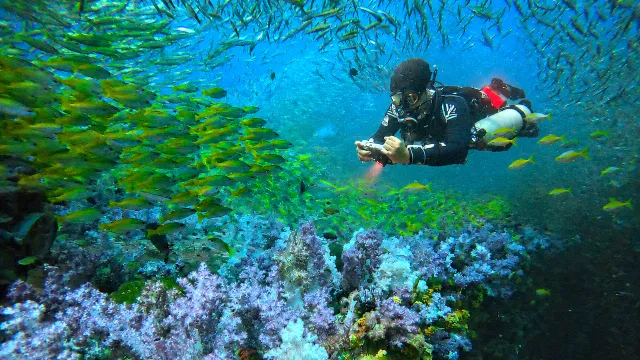
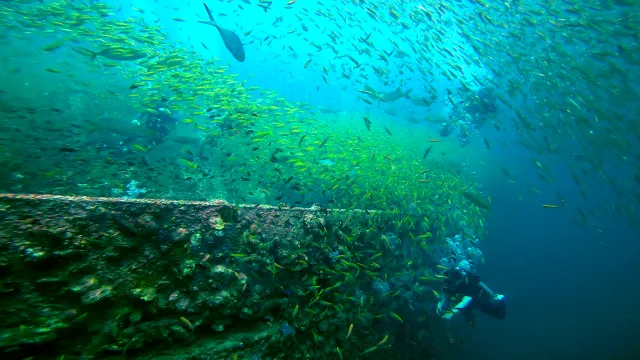
The King Cruiser Wreck, an old car ferry / catamaran that transferred tourists between Phuket and Phi Phi Don Island, sank by accident in 1997 - luckily with no casualties. Located just east of Shark Point (north of Green Island), it sits at about 32m depth. It's around 75m long and 25m wide, with it's shallowest points being around 18m. There are a few swim-throughs, though it's structure has collapsed in a quite a few places and actual wreck penetrations should only be done on a properly prepared technical dive. Either way, the King Cruiser Wreck is definitely an 'advanced' dive site.
There's usually a mooring line (sometimes 2), for descents and ascents, that will take you down to the stern (or bow) of the wreck. On good days, you'll see the top of the wreck from near the surface as you descend, and on a few rare days it's even possible to see the bottom! Though most days, expect changes in visibility as you go deeper - usually upstream of / in the current and on top of the wreck has the best visibility. (I'd always recommend using a line at this wreck for descents, ascents and safety-stops whenever possible.)
There's always heaps of fish at the King Cruiser Wreck, and it's good for macro critters too, plus there's a ton of colour (if you use a torch) due to the many hard and soft corals - the corals here don't seem to have been affected by warm water periods.
The King Cruiser, like the other dive sites on this tour, is more exposed to the elements and currents can be strong. Boats will always try to dive the King Cruiser first, due to it's depth, for a decent bottom time, but on occasion will make it the 2nd dive of the day to avoid the strongest currents or potential bad weather.
Strong current at the King Cruiser (or any reef) isn't necessarily a bad thing as it will bring in more fish closer to the wreck. And you can always find some protection from current behind or in the belly of the wreck. But stronger current will often bring up more sediment from behind the wreck and reduce visibility. For the best diving at the King Cruiser, you'll want to go slow and be close to the wreck anyway, so perhaps murky water (as at a lot of wrecks) isn't such of an issue.
On a good vis day, diving the King Cruiser Wreck is amazing!
Diving At Shark Point Phuket
Shark Point
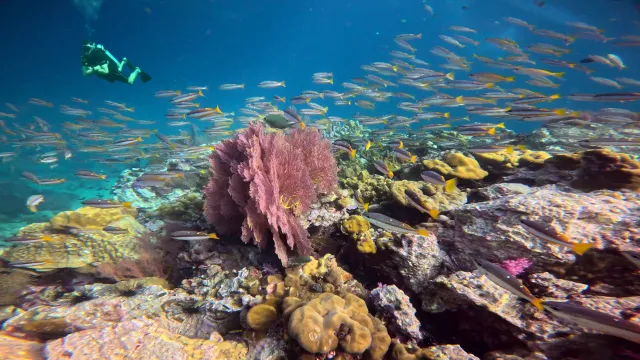
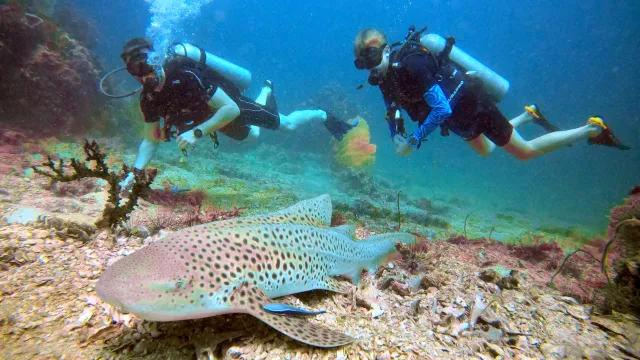
Prior to the warm water early in 2024, Shark Point was by far the prettiest of Phuket's dive sites because of it's mixture of copious colourful soft corals, hard corals, big barrel sponges and gorgonian fans. However, unlike previous warm water periods, lots of the soft corals and fans didn't survive, although now many soft corals are reappearing. Aside from that, other marine life doesn't seem to have changed and Shark Point is still an awesome dive with lots to see!
Shark Point has 3 big pinnacles: Pinnacle 1 (the most northern) sticks out above the surface, Pinnacle 2 (some 30m due south of Pinnacle 1) comes to around 5m below the surface, and Pinnacle 3 (some 20-30m south-southeast of Pinnacle 2) finishes around 10m below the surface - with the sandy bottom being around 18m between pinnacles. And there's a small artificial reef on the west side of Pinnacle 3 which is well worth a quick visit, for the more experienced diver.
All 3 pinnacles have different characteristics and therefore attract a variety of marine life - often including zebra (leopard) sharks - and so you'll likely see more when diving around as much of Shark Point's landscape as possible (it's a pretty big dive site).
Strong currents do bring in a lot of fish around the Pinnacles - which can offer some protection - but unfortunately the strong currents aren't uniform and so using drift diving techniques, to move more easily around Shark Point, is a little complex. And when formulating the best plan for diving Shark Point, it's also best to account for dive boats preferring to drop-off / pick up on either Pinnacle 1 or Pinnacle 2.
I love diving around Shark Point in the current. It makes for an exciting dive and often pays-off with something special! And BTW, Shark Point's Thai name is actually 'Hin MuSang', which roughly translates into 'Forest-Deer Rock' (MuSang being a forest deer that can be found near the Burmese border).
Diving At Koh Doc Mai
Koh Doc Mai
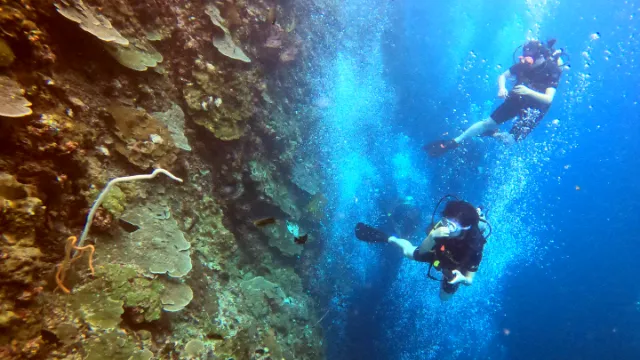
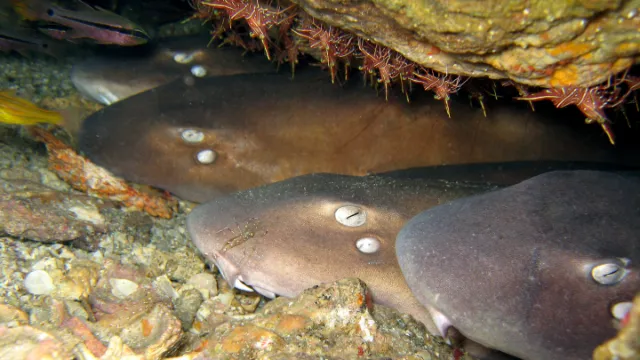
Koh Doc Mai (a small island just east of Phuket) is often underrated, partly due to very varied visibility and being exposed to the stronger currents, but it has a whole bunch of marine life that really adds to a King Cruiser diving day trip. And sometimes a dive at Koh Doc Mai turns out the best dive of the day!
Part of the reason for it's reputation is that the focus of a King Cruiser dive tour is the wreck, so sometimes conditions at Koh Doc Mai are outside of the 'ideal' conditions. Plus Koh Doc Mai is the 'fall back' dive site when it's too choppy for Shark Point - so again, diving it when conditions aren't at their best. During these times, visibility can suffer because Koh Doc Mai is closer to Phuket (and other smaller islands) where the sea bottom is shallower and siltier - but it also depends on current / the tides direction.
Koh Doc Mai is mostly a wall dive, and like the King Cruiser Wreck, it's best to 'go slow' and look for the macro sea-life, like seahorses, shrimp and nudibranchs, and it's a great spot for finding grey bamboo sharks! There are also plenty of schooling fish, particularly off the wall where you can often find different types of barracudas hanging out in the current.
Be aware that, although a drift here is possible, it can be a very fast drift and current isn't always uniform. In fact the current can completely reverse on parts of Koh Doc Mai's wall, partly due to the caverns / caves on it's east side - which, apart from diving under the big over-hang, should really be avoided unless properly trained AND diving with the right equipment!
Diving At Anemone Reef
Anemone Reef
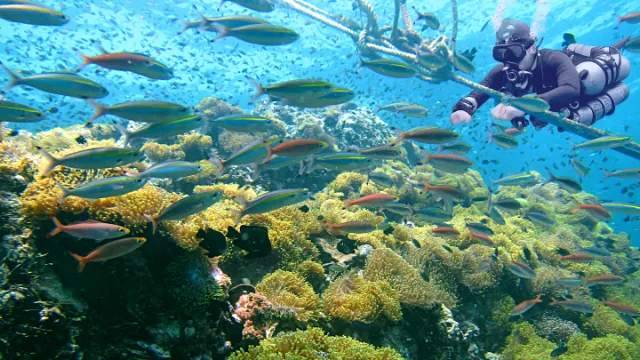
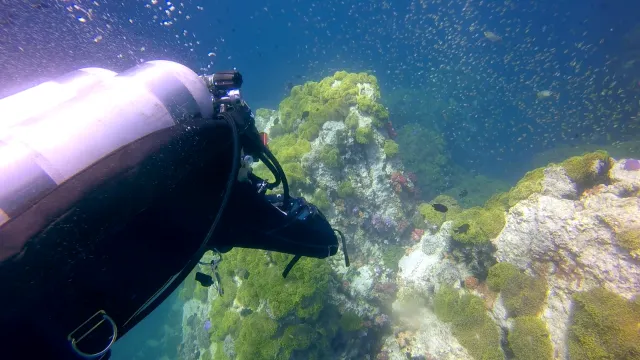
Anemone Reef is a single pinnacle just north-west of Shark Point. Because it's a smaller dive site, and therefore even more exposed to current, Shark Point is often preferred on this 3 dive combination day trip. But when currents are at their weakest, just after each half-moon, Anemone Reef can be an excellent dive and can have similar critters to Shark Point.
During the last few years, Anemone Reef was one of the dive sites where most likely to have visits from whale sharks, even though it was dove less frequently! And it's a really good idea to go looking out mid-water amongst the big schools of fish anyway, especially when no-deco time becomes limited deeper and divers start bunching up nearer the pinnacle's summit, some 4-5m below the surface.
BWT Anemone Reef was the dive site that the King Cruiser hit before slowly sinking near by.
Scuba Diving Suitability
Although diving conditions (current and visibility) have been mentioned in the individual dive site descriptions for a King Cruiser dive tour, suitability for diving these sites should be looked at as a whole.
Although 3 of the dive sites mentioned above have shallower areas, the King Cruiser Wreck is a deep dive. And ALL of these dive sites can potentially have low visibility and often have strong currents (especially shallow where more exposed) - not to mention being on the open sea where it can be a lot more choppy on windy days. So all of these sites should be considered 'advanced' dive sites.
This doesn't mean that newer divers shouldn't dive them. But divers should be at least 'Advanced Open Water' divers, or be taking an appropriate course under the proper supervision of a qualified scuba instructor. And also consider your personal limits and preferences, because if you aren't comfortable, you may not enjoy these awesome dive sites as much as you could.
Whether divig for fun or taking a course, a good instructor will thoroughly brief and prepare you for diving these sites with the right techniques to better enjoy them - and perhaps help you become a better more confident diver in the process.
Affects Of Weather & Current
Bad weather can affect the dive sites on the King Cruiser day trip in 2 ways - more so than on other trips because the dive sites are out on open sea and closer to Phuket and Phang Nga Bay:
Current may also have quite an affect on these dive sites. A longer period of strong current can stir up sediment from the seabed and lower visibility, especially at depth or on the parts of a dive site that are sheltered from the current. But it's not always as simple as that...
The King Cruiser Wreck can have great visibility, especially closer to the incoming high tide, even when currents are strong - though you'll likely need to be out in the current and on top of the wreck. Wreck dives tend to be a bit murky however, and there's a lot of sediment deeper around the wreck that can be stirred up in stronger currents.
There's more often a mooring line on the stern / northern end of the wreck, so it can be a lot easier coming back to the line with an in-coming tide. If there's a stronger out-going tide, then turning the dive should occur earlier to ensure enough gas (and bottom time if you want to stay deeper and avoid some current) to safely make it back to the line - you'll need the mooring line for an easier ascent and safety-stop when currents are strong.
Shark Point & Anemone Reef, being similar dive sites and fairly near each other, share similar characteristics in regard to the affect of currents. When currents are strong, more fish come in closer to the reefs and if you encounter a zebra shark, it'll likely be hiding from the strongest current behind one of the pinnacles.
Again, out in the stronger current will likely have the best visibility and more fish, with the murkier water behind the pinnacles, but Pinnacle 1 and Pinnacle 3 are also large enough to often have clearer water areas behind them / out of the main current. Take note that the strongest currents at Shark Point & Anemone Reef tend not to be uniform - it's not an easy drift dive!
Koh Doc Mai can be a nice little drift dive but when currents are at their strongest, it's a pretty tough irregular drift that changes depending on how close you are to the wall, how far along it you are, and how deep you are diving. Koh Doc Mai is definitely an 'advanced' dive site when currents are strong.
An out-going tide can mean better visibility but can mean the hardest current along the eastern wall (arguably the best part of the dive site). An in-coming tide likely means an easier dive along the same wall but probably less visibility.
Koh Doc Mai is usually the last of the 3 dives on a King Cruiser dive trip, so it's best dived with a torch or two - later in the day less daylight hits the wall. You'll want to get close to the wall for all the best macro critters anyway, so even with strong current and potentially low visibility you can still have a really good dive!
⇓ High vs Low Season Diving ⇓
Phuket Diving Seasons
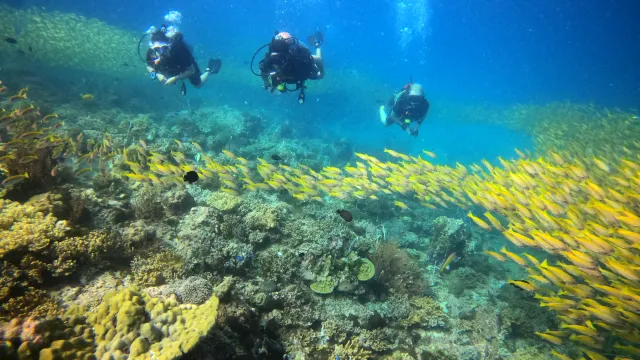
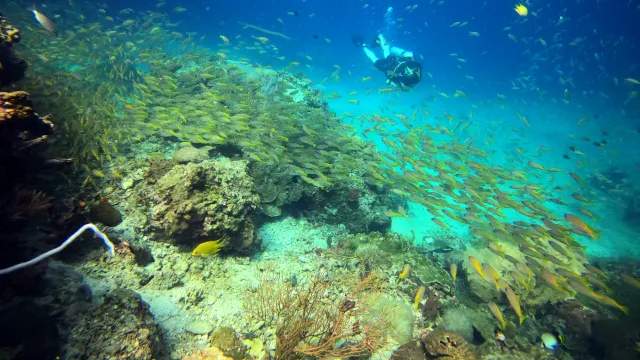
Phuket diving tours run all year round to the 3 main day trip destinations. And diving is good, all year round. There's no particular season when the day trip diving is better. Although big storms can have a negative effect, visibility and water conditions are often more governed by the strength of the tide swings; they are on a 2 week cycle and can sometimes have a tide swing as much as 3 meters between high and low tides!
High season (November - April)
Diving during Phuket's high season usually means lighter winds from the east and probably better weather but it's mostly that the weather is more stable with more dependable forecasts. High season weather fronts tend to hit the mainland first and dissipate before coming to Phuket. One advantage of the easterly winds is diving more of Phi Phi's western sites, which are arguably better.
Low season (May - October)
Diving during Phuket's low season usually means winds from the west. This doesn't mean the weather is bad (sometimes low season can have great weather) - diving conditions can be awesome - it's just less stable and forecasts change more frequently. And because the wind is coming straight off of the Indian Ocean, it can bring more moisture / rain. Bigger 'ocean swell' can also develop, though luckily Phuket Island offers some protection for day trips that are heading east towards the Phi Phi Islands. And although low season may mean more rain on the west coast of Phuket, there is often a 'pocket' of better weather between Phuket and the mainland to the east.
Manta Ray / Whale Shark Season
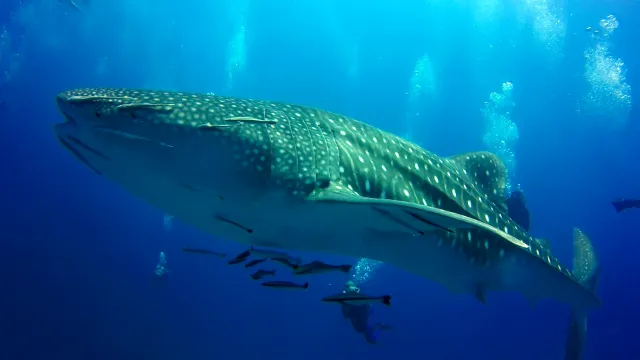
After all these years diving from Phuket, I haven't really noticed a season for diving with whale sharks. Although, if I had to suggest the best time and destination, I've had the best luck seeing whale sharks on dive tours from Phuket to the Similan Islands, Koh Tachai and Richelieu Rock, during March through to mid April.
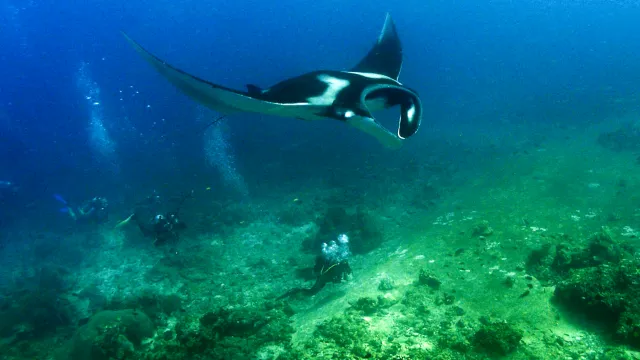
For manta rays, it's really more of a case of getting on a Phuket dive tour to South Tip at Racha Noi, where mantas are frequently spotted - and that would be during high season when weather is more dependable. However, for seeing manta rays on dive tours to the Similan Islands, Koh Bon, Koh Tachai and Richelieu Rock, I'd suggest any time from late December through to April.
Is Phuket Scuba Diving Any Good?
(An Honest Look After More Than 20 Years Underwater)
After more than 20 years and thousands of dives around Phuket, I've seen first-hand the effects that natural climate cycles, pollution, fishing and tourism have had on the local dive sites and marine life, as well as the remarkable resilience of many dive sites. I'm pleased to say that, despite these changes, I still regularly encounter some incredible marine life, including most - if not all - of the species I saw when I first started diving in Phuket. Here's my honest assessment of what scuba diving in Phuket is really like today.
Honestly, there have been some changes - particularly to do with excessively warm water periods (El Niño) that have sometimes caused coral bleaching - but for the most part, the dive sites have weathered the natural cycles well and have mostly recovered from any 'negative' changes.
Around 2010, there was a particularly long warm water period (some 4-5 degrees above it's usual 30 degrees) that caused temporary coral bleaching at many of Phuket's dive sites. Unfortunately the staghorn coral reefs between the bays at Racha Yai never recovered. Also, for a short period after that, we encountered fewer zebra sharks (locally called leopard sharks) at the other dive sites. But they were about the only major changes that occurred back then and just like most other corals recovered / returned, so did the zebra sharks. (Blacktip sharks seen at Phi Phi seemed much less affected.)
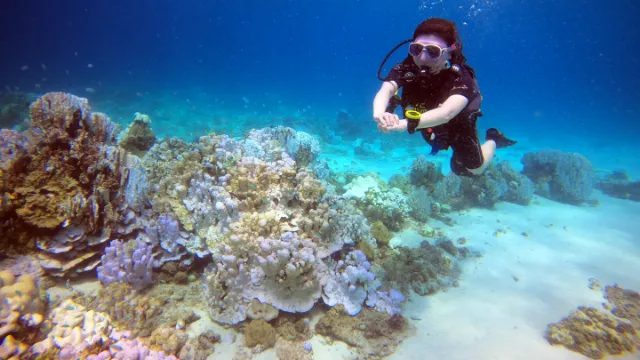
June 2024
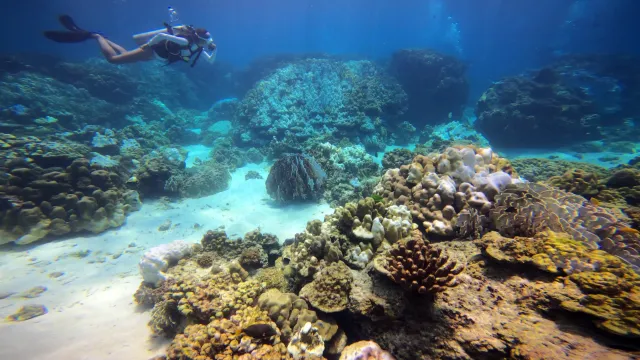
August 2024
Phuket's dive sites are also affected by cold water cycles (La Niña). More recently (around the start of 2024), there was a period of about 2 to 3 months with water temperatures down to as low as 17 degrees - personally experienced on 40-50m dives at Racha Noi! Not so pleasant after descending from the 30 degree shallow water but well worth it for all the big marine life that we encountered! (Jenkins' whip rays, feather-tail whip rays, blotched marble rays, white-spotted shovel-nose rays, and a bunch more zebra sharks than usual.)
Shortly after that period of cold water, Phuket's seas experienced some more warm water, which again caused some more coral bleaching. Happily, after about a month, the sea temperatures returned to normal and corals are started to recover and regain their colour.
And so the cycles go on - as they do all around the world!
Luckily, dive sites around Phuket have an abundance of other marine life that seems mostly unaffected by the warm water periods. To quote one of my dive buddies:
A bad day diving Phuket is usually better than lots of other places I've been!
Experience Amazing Phuket Diving!
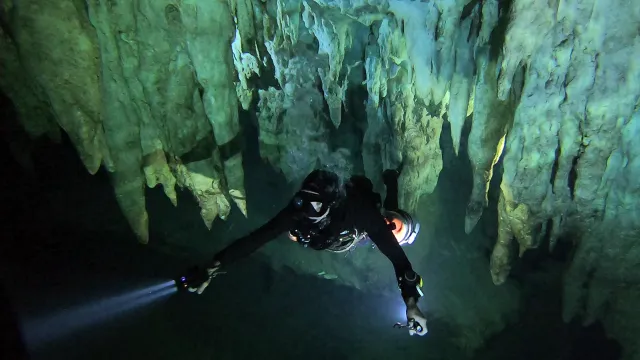
So, Is Phuket Diving Worth It?
While Phuket's reefs have certainly changed over the years, that's true of many dive destinations around the world. In my experience, Phuket continues to offer excellent diving, with healthy reefs across many dive sites, an impressive variety of marine life, and many different dive sites to keep both new and experienced divers returning year after year.
So, unless you're unlucky with the weather or sea conditions, there's every chance you'll come away from your Phuket diving trip with some fantastic underwater memories. And choosing the right dive center and instructor - based on experience, safety standards and local knowledge - can make a real difference to your overall diving experience!
If you're ready to experience Phuket's underwater world for yourself, I'd love to help you make the most of your diving here.